Archives
-
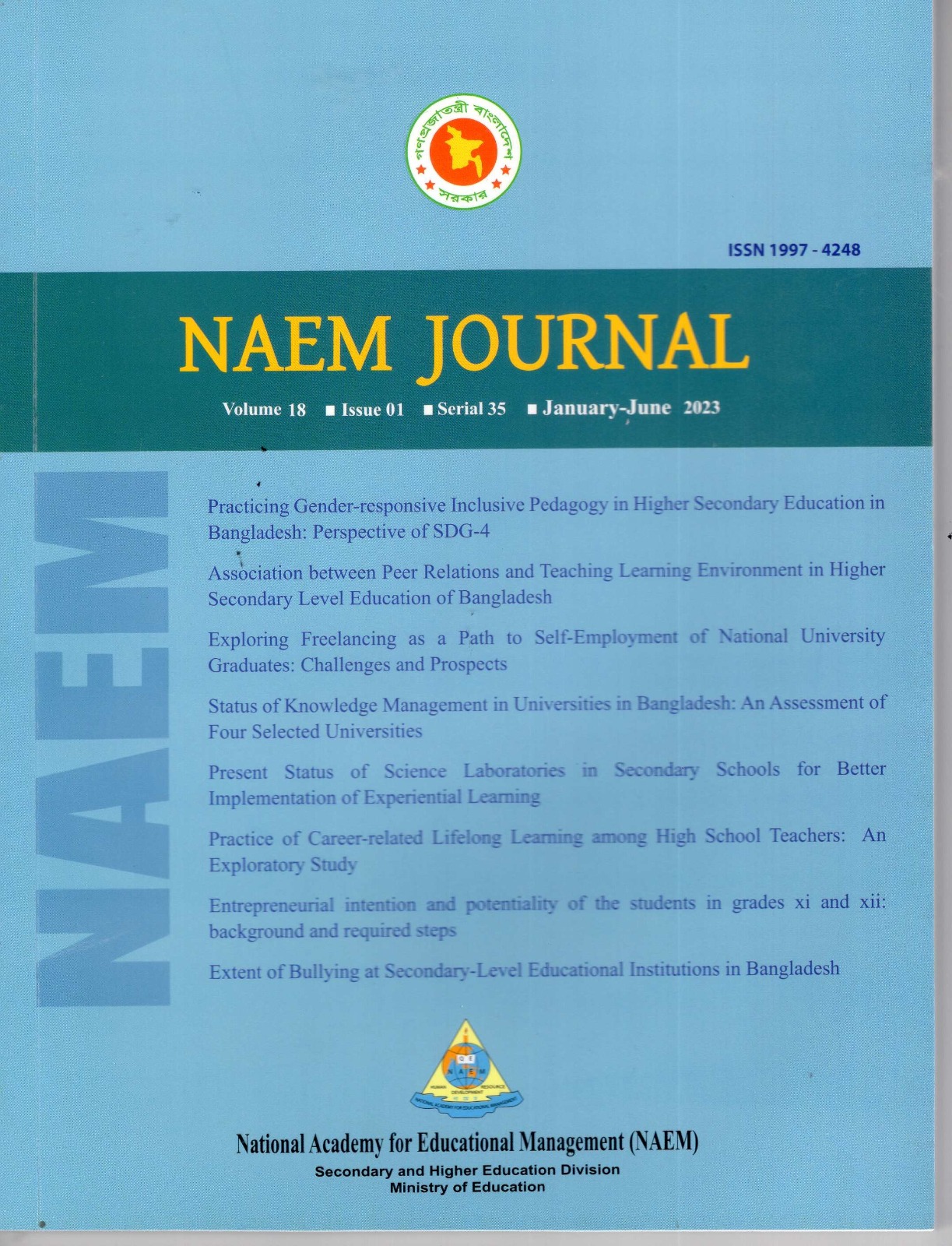
NAEM Journal
Vol. 18 No. 1 (2024)NAEM Journal, Volume 18, Issue 01, Serial 35 (January–June 2023), is a half-yearly, double-blind peer-reviewed academic journal published by the National Academy for Educational Management (NAEM), under the Secondary and Higher Education Division, Ministry of Education, Bangladesh. This issue features eight research articles covering gender-responsive inclusive pedagogy, peer relations and the teaching-learning environment, freelancing and self-employment, knowledge management in universities, science laboratory facilities, career-related lifelong learning among teachers, entrepreneurial intentions among higher secondary students, and bullying in secondary-level educational institutions. The articles explore educational challenges, research findings, and recommendations for improving the quality, inclusiveness, and effectiveness of education in Bangladesh.
-
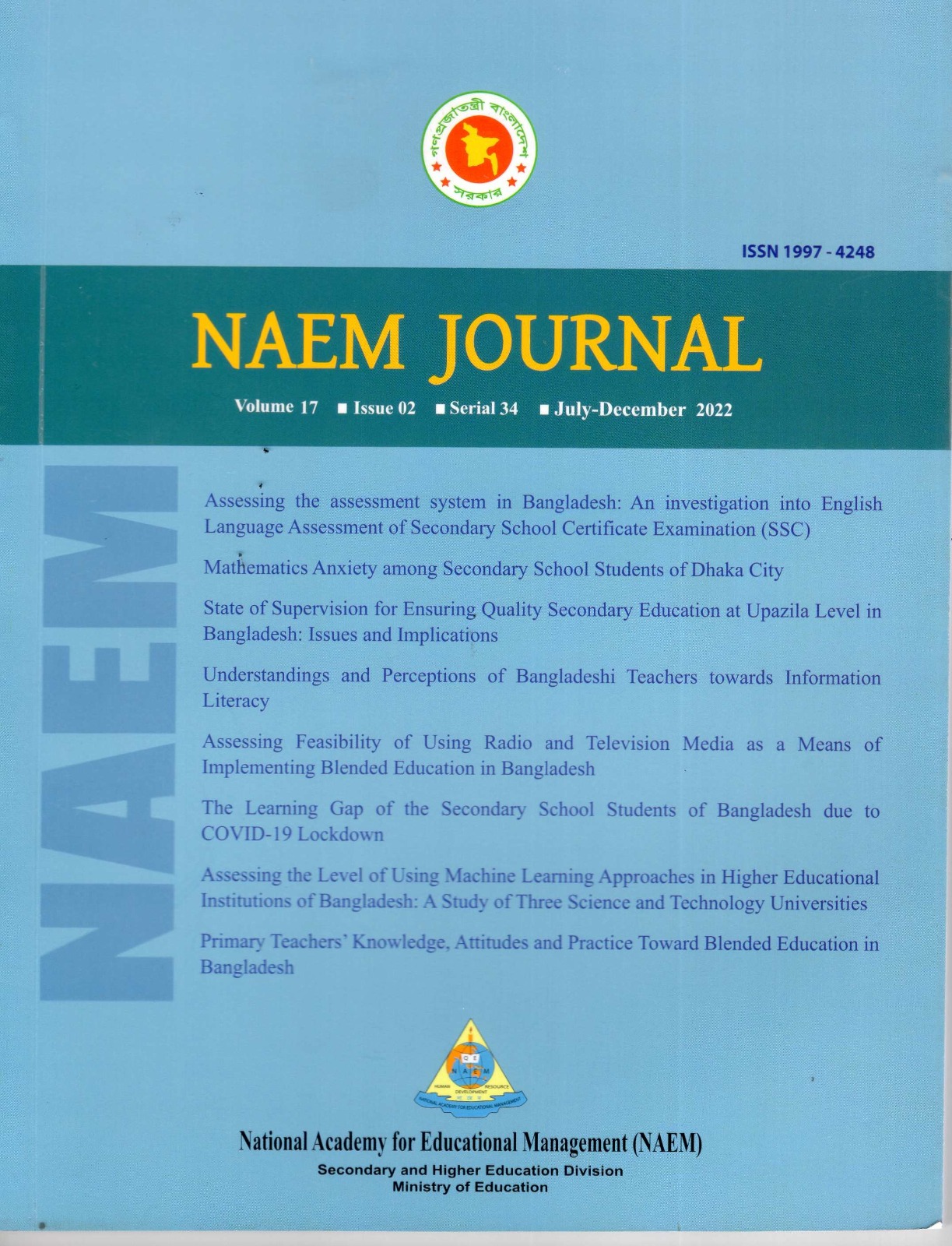
NAEM Journal
Vol. 17 No. 2 (2024)NAEM Journal is a half-yearly, double-blind peer-reviewed academic journal published by the National Academy for Educational Management (NAEM), Secondary and Higher Education Division, Ministry of Education, Bangladesh. Volume 17, Issue 02, Serial 34, July–December 2022, features research articles on English language assessment in the Secondary School Certificate (SSC) examination, mathematics anxiety among secondary school students, supervision for quality secondary education, teachers’ information literacy, blended education through radio and television, learning gaps caused by the COVID-19 lockdown, machine learning in higher education, and primary teachers’ knowledge, attitudes, and practices regarding blended education.
-
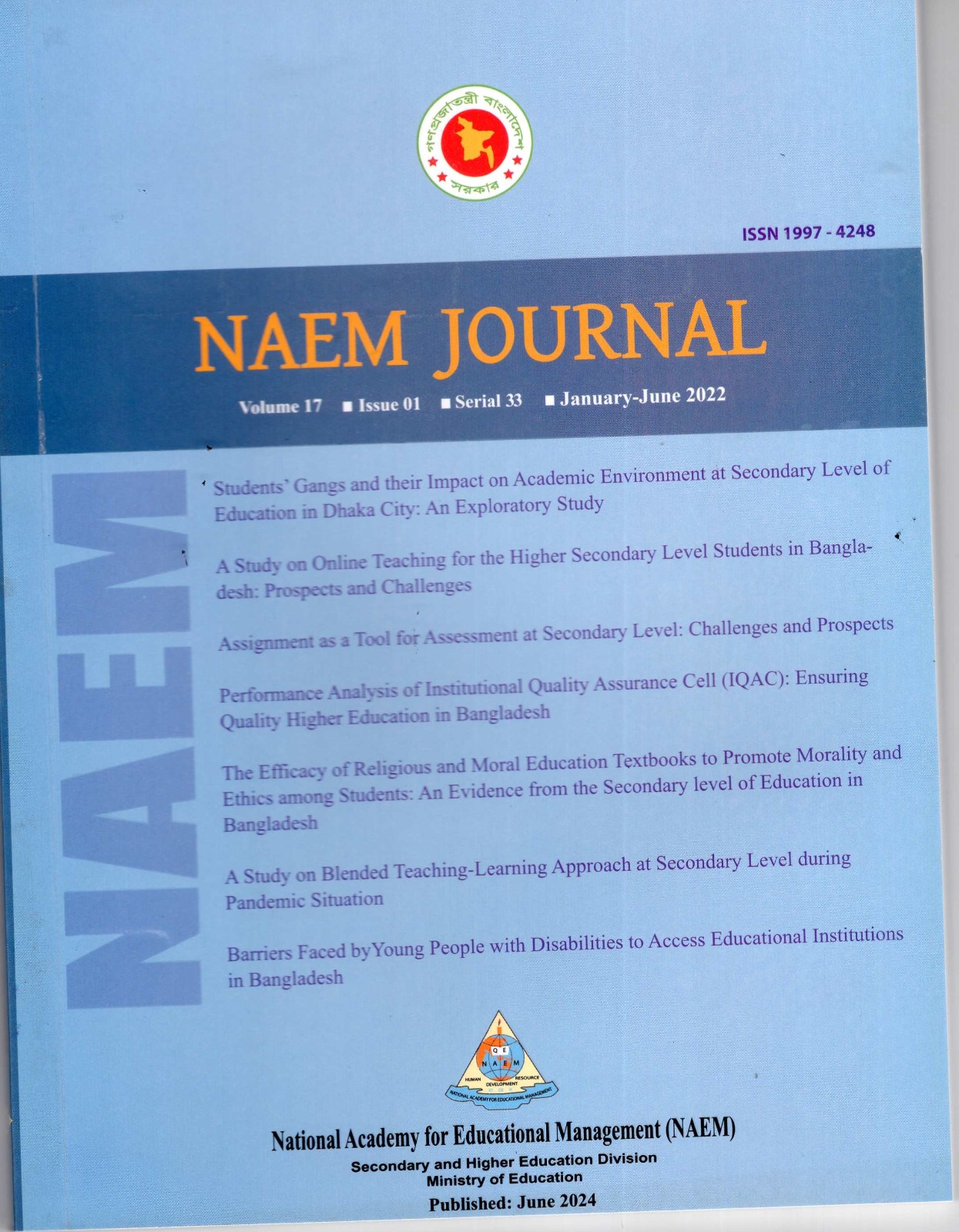
NAEM Journal
Vol. 17 No. 1 (2024)NAEM Journal, Volume 17, Issue 01 (January–June 2022), Serial No. 33, published by the National Academy for Educational Management (NAEM), Ministry of Education, Bangladesh. The issue features seven research articles on contemporary educational topics, including student gangs and academic environments, online teaching, assessment practices, institutional quality assurance, religious and moral education, blended teaching-learning, and barriers faced by young people with disabilities in accessing educational institutions.
-
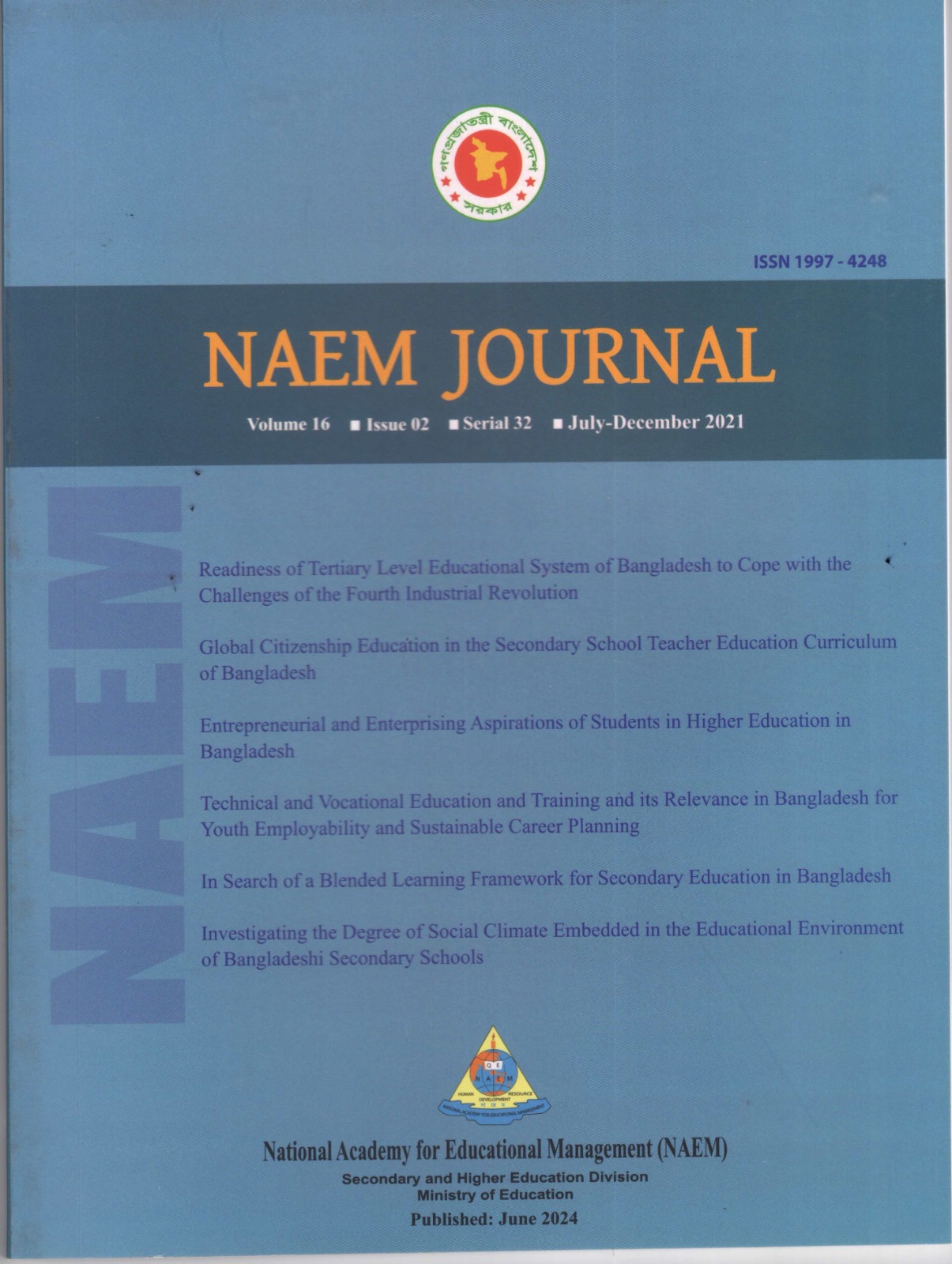
NAEM Journal
Vol. 16 No. 2 (2024)NAEM Journal, Volume 16, Issue 02, Serial 32 (July–December 2021), is a half-yearly, double-blind peer-reviewed journal published by the National Academy for Educational Management (NAEM), under the Secondary and Higher Education Division, Ministry of Education, Bangladesh. This issue presents research on various aspects of education in Bangladesh, including the challenges of the Fourth Industrial Revolution in tertiary education, global citizenship education, students’ entrepreneurial aspirations, technical and vocational education and youth employability, blended learning frameworks for secondary education, and the social climate of secondary schools. The journal aims to contribute to educational research, inform policy development, and support initiatives to strengthen the education system in Bangladesh.
-
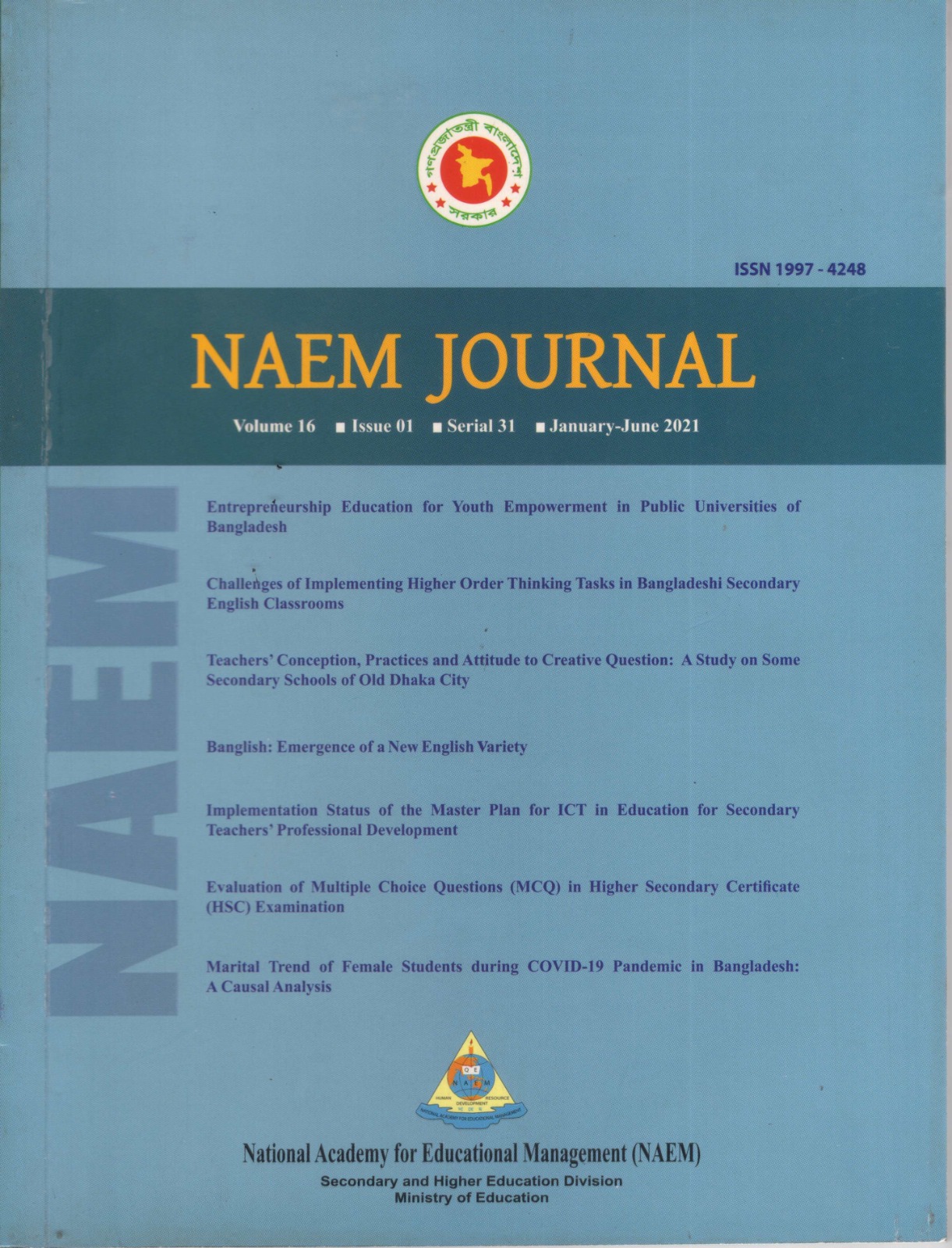
NAEM Journal
Vol. 16 No. 1 (2021)NAEM Journal, Volume 16, Issue 01, Serial 31 (January–June 2021), is a half-yearly, double-blind peer-reviewed journal published by the National Academy for Educational Management (NAEM), under the Secondary and Higher Education Division, Ministry of Education, Bangladesh. This issue contains seven original research articles addressing contemporary educational issues in Bangladesh, including entrepreneurship education for youth empowerment, higher-order thinking skills in secondary English classrooms, teachers’ practices and attitudes toward creative questions, the emergence of Banglish, ICT-based professional development for secondary teachers, evaluation of multiple-choice questions in HSC examinations, and the marital trends of female students during the COVID-19 pandemic. The issue aims to promote educational research, disseminate new knowledge and innovations, inform educational policy and practice, and contribute to improving the quality and sustainability of the education system in Bangladesh.